
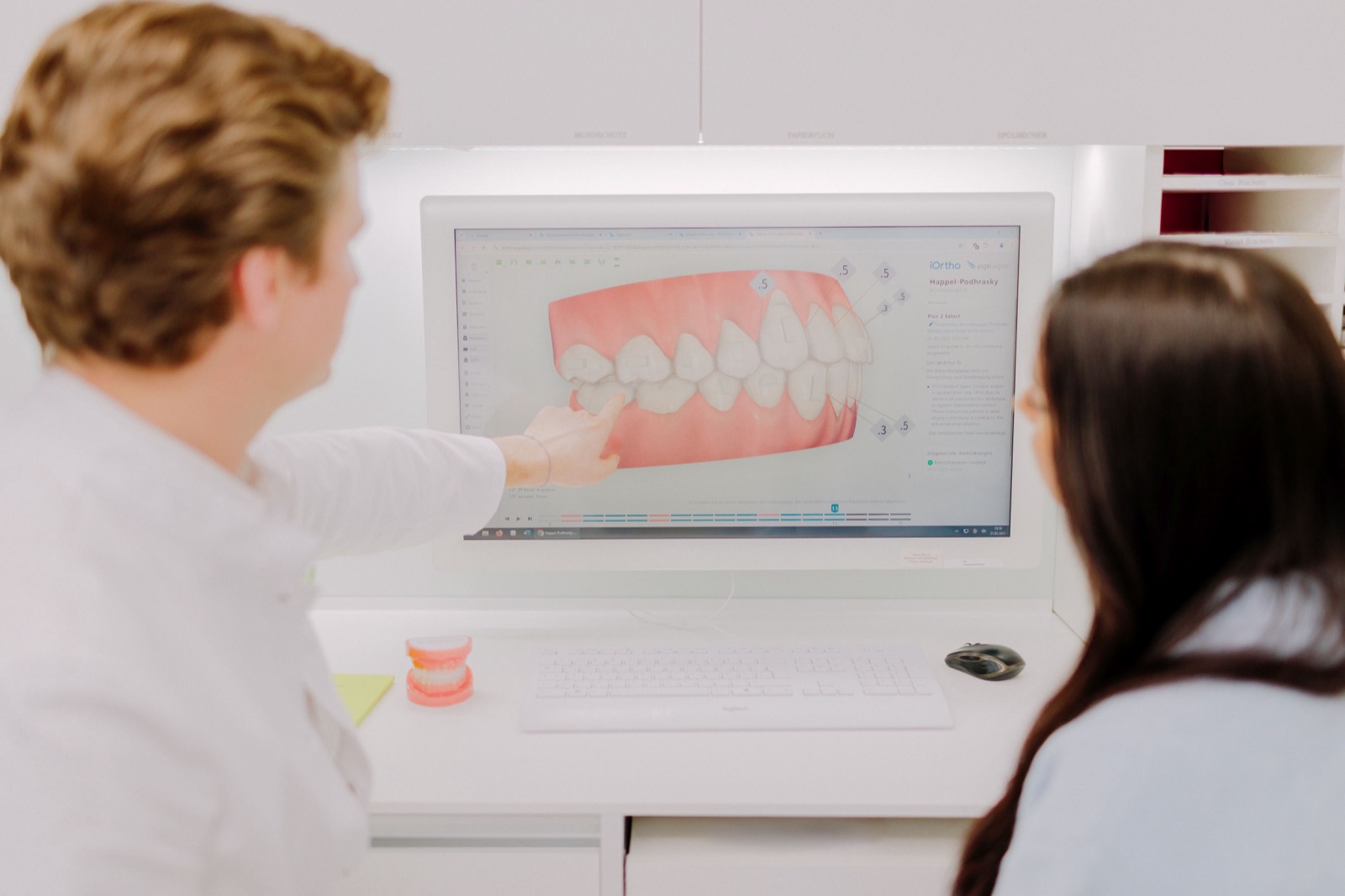
Common types of misaligned teeth
The bite problems listed below can occur in children and teenagers on their own or in combination. If they are treated in good time, before growth is complete, surgery later on can often be avoided. In this section you can read about the consequences if these bite problems remain untreated.
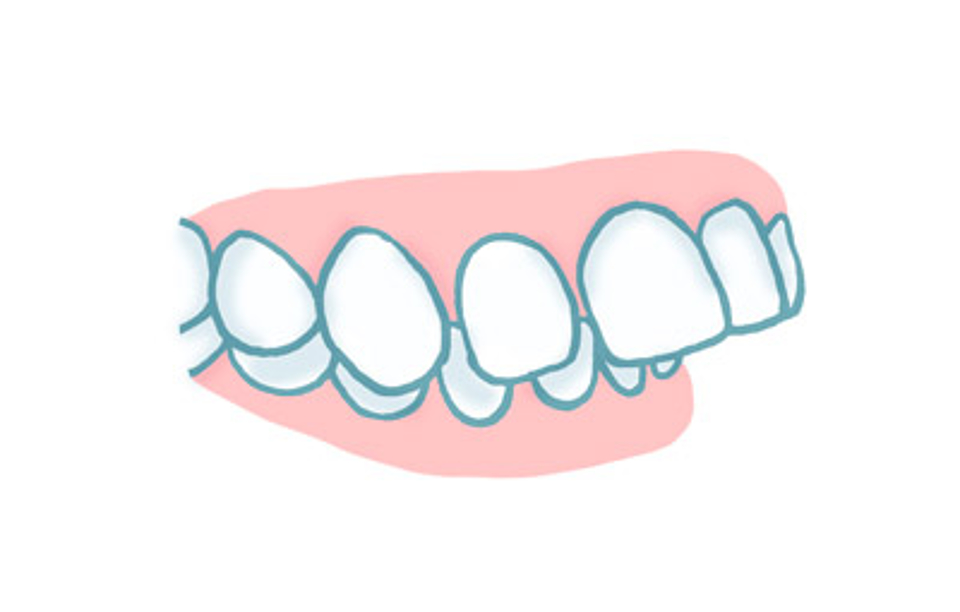
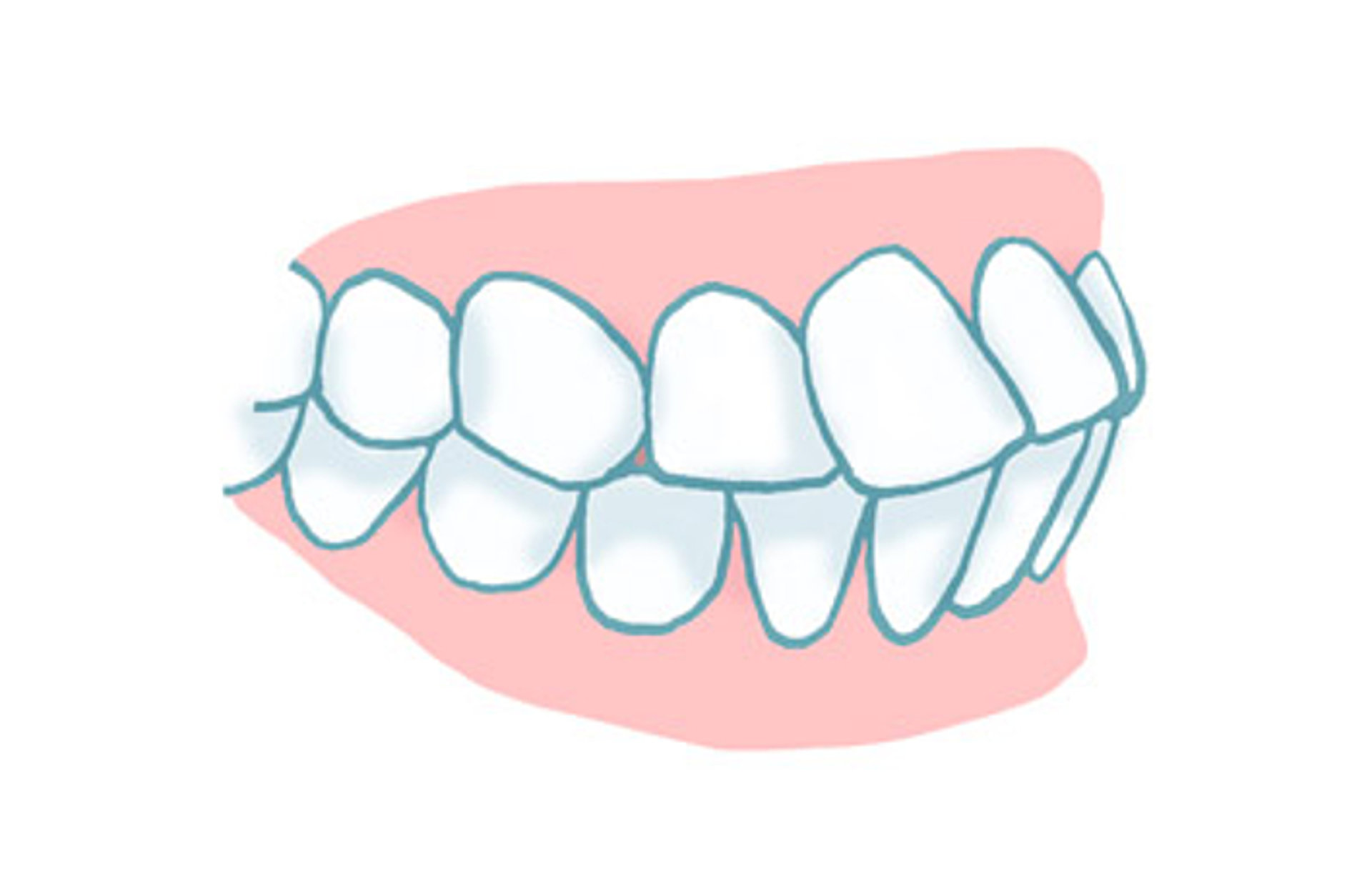
Overjet
Overjet is the most common form of misaligned teeth. The lower jaw sits too far back, leaving a gap between the upper and lower incisors.
Possible consequences:
- Deep bite: When biting together, the lower incisors overlap the upper teeth. This can injure the gums. The lower incisors can grow into the palate and injure the lining of the palate.
- Injury: The risk of injury to the incisors (during sport, for example) is high. The lip no longer lies protectively over the teeth, and the lower teeth cannot provide additional support.
- Functional problems: There may be problems with biting off, chewing or pronunciation.
- Teeth wear down: Because the teeth don’t mesh together exactly, they wear down heavily. As a result, you sometimes see severely worn-down crowns even in young adults.
- Jaw joint problems: Overjet forces the lower jaw to bite further forward. This can overload the jaw joint, which in turn can lead to clicking in the jaw joint or considerable pain.
Underbite
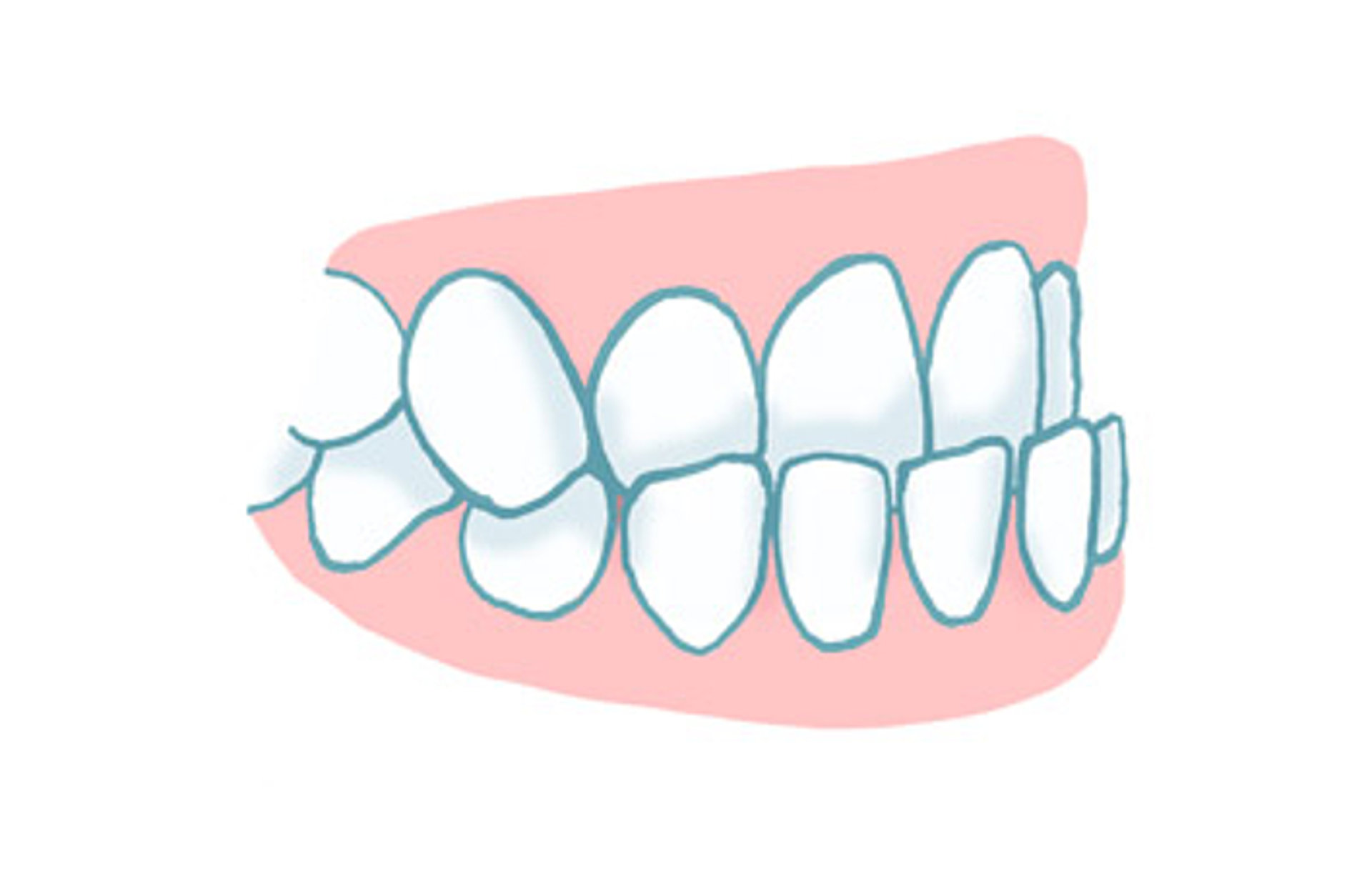
With an underbite, the lower jaw bites too far in front of the upper jaw. The incisors sometimes meet edge to edge here, or even sit the wrong way round, one behind the other, in a so-called crossbite.
Possible consequences:
- Jaw joint problems occur: The jaw joint can be put under too much strain. This leads to clicking, or to restricted jaw opening or lockjaw, with considerable pain.
- Teeth wear down: Because the teeth don’t mesh together cleanly, they wear down excessively. Severely worn-down crowns are not unusual in young adults.
Cover bite
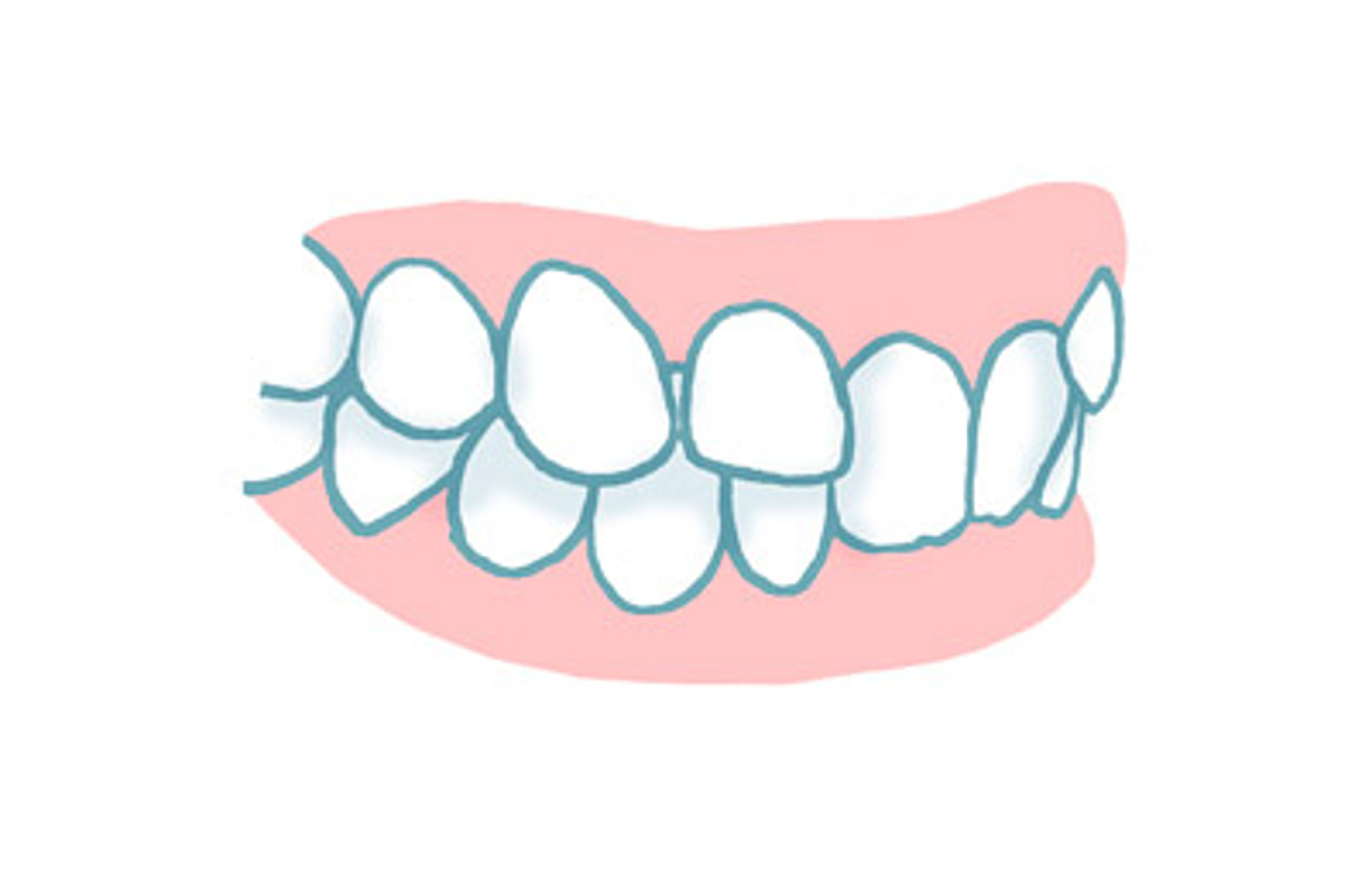
A special type of distal bite is the cover bite (Angle Class II, Div. 2). As a rule, with a cover bite, some of the upper front teeth tilt backwards and the others tilt forwards.
Possible consequences:
- Deep bite: The lower incisors can grow into the palate and injure the lining of the palate.
- Injury: The risk of injury to the protruding incisors is high, during sport for example, because the lip no longer lies protectively over the teeth and the lower teeth cannot provide additional support.
- Crowding: The dental arches collapse because they don’t support each other.
- Teeth wear down: Because the teeth don’t mesh together exactly, they wear down more heavily. As a result, you sometimes see severely worn-down crowns even in young adults.
- Jaw joint problems: The backward-tilted front teeth sometimes cause a forced bite. This is because the lower jaw is guided further back when biting together. The result is an overloaded jaw joint and possibly clicking, or restricted jaw opening or lockjaw, with considerable pain.
Crossbite
With a lateral crossbite, the lower back teeth bite over the upper back teeth. A crossbite can occur on one side or on both sides.
Possible consequences:
- Asymmetrical face: Over the years, a one-sided crossbite — if left untreated — causes the lower jaw to shift towards the crossbite side. The midlines of the dental arches no longer line up.
- Jaw joint problems: A one-sided crossbite forces the lower jaw to bite in a particular direction. In some cases this overloads the jaw joint, which in turn can lead to clicking or considerable pain.
- Wear of the teeth: Because the teeth don’t mesh together exactly, they wear down heavily. As a result, you sometimes see severely worn-down crowns even in young adults.
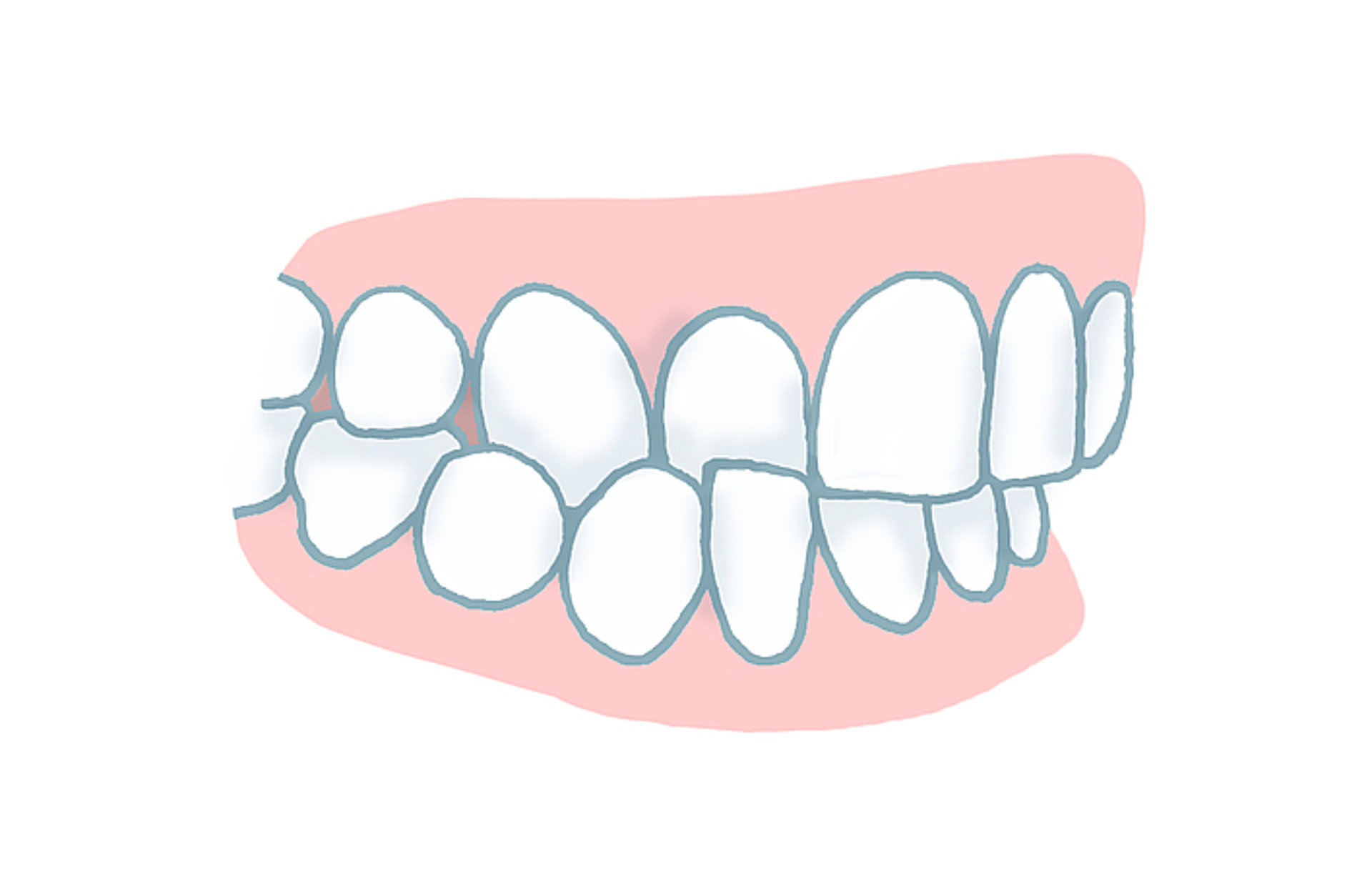
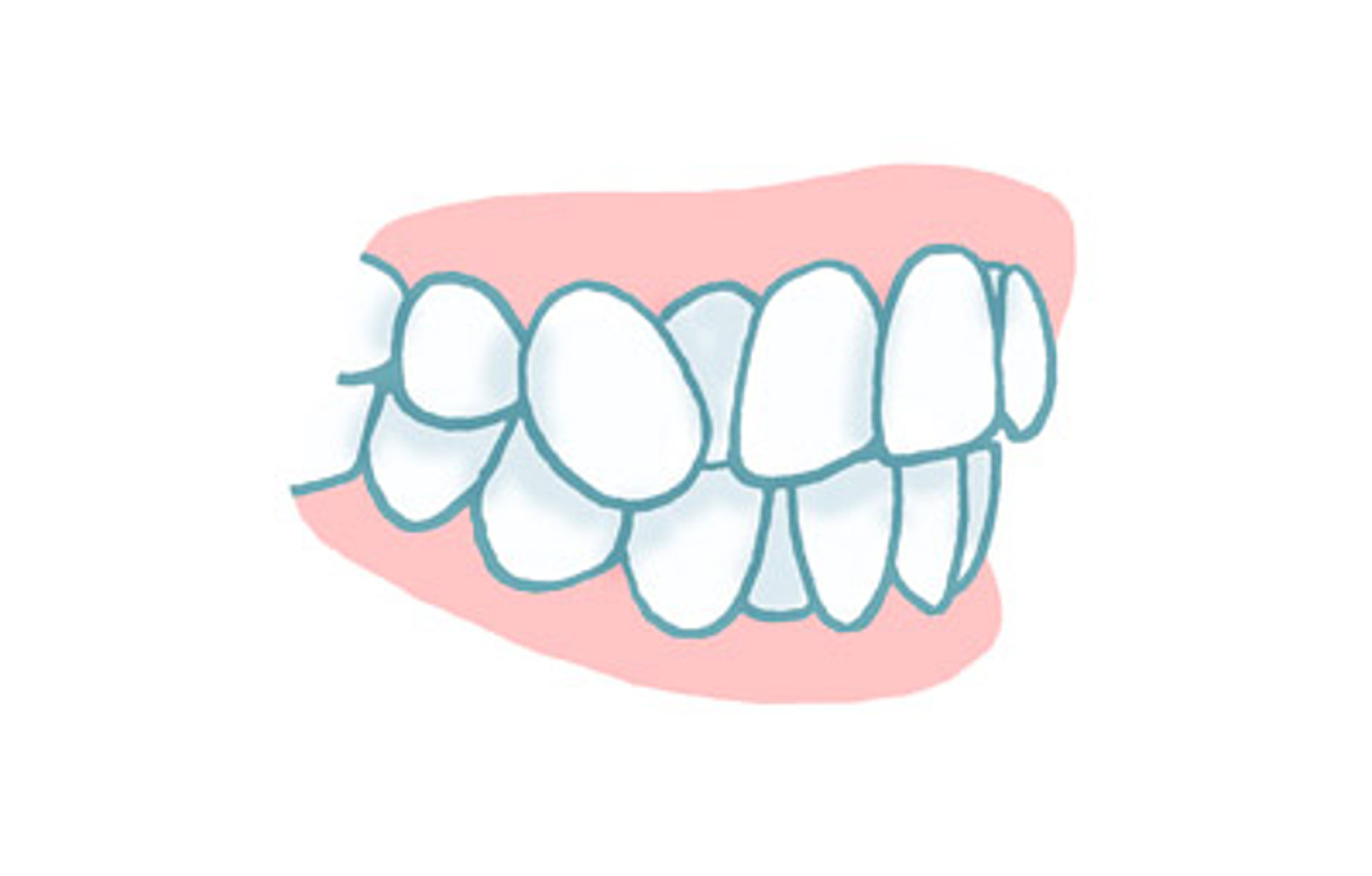
Crowding
With crowding, the front teeth overlap and interlock. In some cases the misalignment is so pronounced that teeth stand almost one behind the other.
Possible consequences:
- Pain: The teeth are very sensitive to pain.
- Receding gums: Because the teeth migrate out of the bone, very pronounced gum recession develops on individual teeth over the years.
- Excessive tooth decay: Some teeth are barely cleaned. As a result, tooth decay or at least gum inflammation occurs very often. Discolouration of the teeth is not uncommon.
- Wear of the teeth: Because the front teeth don’t mesh together exactly, they wear down more heavily. As a result, you sometimes see severely worn-down crowns even in young adults. This affects the appearance of the teeth.
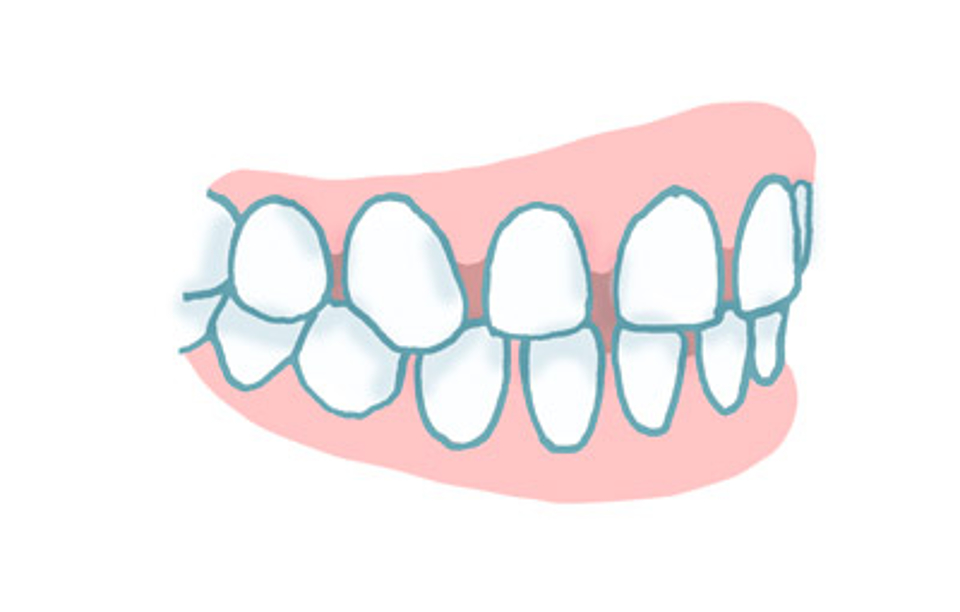
Gaps between teeth
Gaps between the teeth often have a considerable effect on appearance.
Possible consequences:
- Receding gums: Because the teeth migrate out of the bone, very pronounced gum recession develops on individual teeth over the years.
- Gaps develop in the back teeth: If they are not treated, these gaps can cause the opposing tooth in the upper or lower jaw to lengthen considerably. This would then have a negative effect on the bite.
- Teeth drift: The teeth can drift because they don’t support each other.
- Functional problems: There may be problems with biting off.
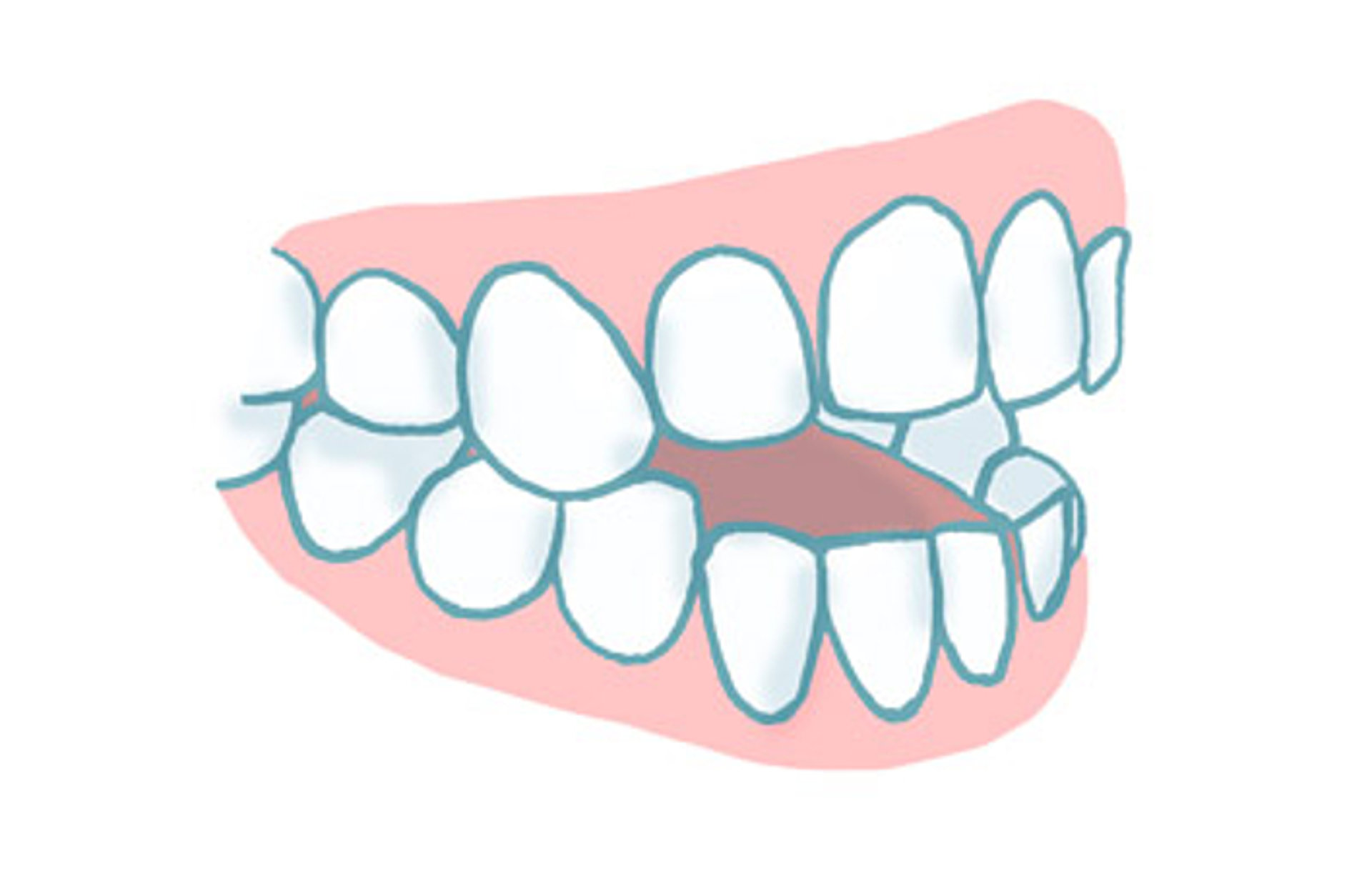
Open bite
With an open bite, the front teeth of the upper and lower jaw don’t touch each other, even when the teeth are clenched together. In extreme forms, only the very back molars touch when biting.
Possible consequences:
- Unable to bite off: These patients can no longer bite off, say, a thin slice of cheese. Chewing function is severely impaired.
- Jaw joint problems: In some cases this can overload the jaw joint, which in turn can lead to clicking or considerable pain.
- Teeth wear down: The overloading of the back teeth increases the loss of tooth enamel, which often makes costly dental work necessary later on.
- The lower jaw looks longer: Purely visually, the face can appear long.
Protrusion
The forward “tipping out” of the front teeth is called protrusion. In this case, either the back teeth have to be moved backwards to get the front teeth back into the jawbone, or even healthy teeth have to be extracted. In adulthood, this tooth movement often starts suddenly with gum inflammation accompanied by bone loss (periodontitis).
Possible consequences:
- Gaps: In some cases, gaps form.
- Receding gums: Because the teeth migrate out of the bone, very pronounced gum recession develops over the years.
Misaligned teeth in teenagers
You don’t need to prepare anything or decide anything in advance: come to a free consultation and we’ll tell you exactly what’s possible.
✓ Free, no-obligation consultation · ✓ Appointments Mon–Fri · ✓ Bring your e-card
Among others: crossbite, open bite, severe crowding, pronounced overjet or underbite, and gaps caused by missing teeth. From IOTN 4, health insurance covers the treatment up to the age of 18. All about free braces (Gratis Zahnspange)
No — quite the opposite: for free braces, what counts is that treatment starts before the 18th birthday. So if you’re not 18 yet, you should have your eligibility checked soon.
Because it can put strain on the jaw joint, gums and tooth structure and makes later procedures more likely. And because a smile you’re not embarrassed about makes a big difference in everyday life.
With a free consultation. We examine you, explain the findings in plain language and tell you which treatment options are open to you. Appointments from Monday to Friday.