
The first appointment: how to prepare your child
The first visit to the orthodontist is often more nerve-racking for children than for their parents. The good news: at the first appointment, nothing gets drilled, nothing gets glued on and nothing gets removed. We talk, we take a look — and your child can ask questions. Knowing this in advance makes coming to see us a lot more relaxed.
What actually happens at the first appointment
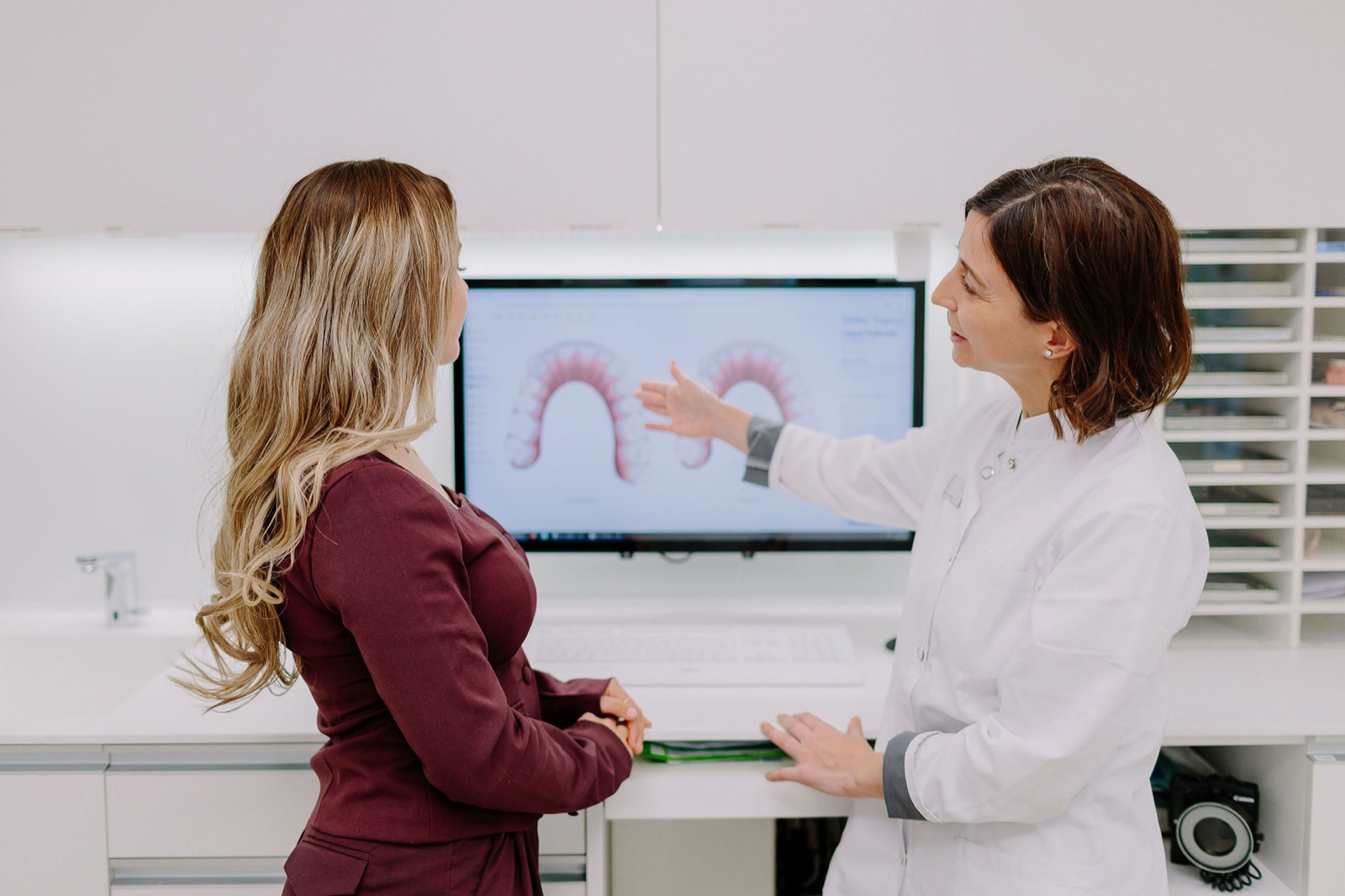
Everything starts with a consultation, for which you as a parent come to us together with your son or daughter — either at our easy-to-reach practice right by the Graben or, if it’s more convenient for your family, as an online consultation.
We all get to know each other and see whether your child already needs treatment. You’ll also find out which options are available and how long treatment takes. The consultation lasts around 30 minutes. You’ll also receive important information about invisible aligners for children and teenagers, treatment time, costs and much more.
Important for anyone who dreads impressions: the detailed analysis of the tooth or jaw misalignment is a separate, later step. Only then do we carry out an examination using state-of-the-art diagnostic methods such as digital scans, photos and cephalometric and panoramic X-rays, and use the results to draw up a comprehensive treatment plan.
Why knowledge is the best preparation
One of the most important factors in reducing anxiety is communication between the orthodontist and the patient. If your child knows what to expect before the visit, they’ll feel calmer and be better able to face the situation. This simple step alone reduces many patients’ anxiety.
So explain to your child beforehand, in simple words, what it’s all about: we look at the teeth, we count and measure, we talk — and then we go home again. Avoid reassurances such as “I’m sure it won’t hurt”, which only bring up the subject of pain in the first place.
Five things that make the appointment easier
- Choose a stress-free day. Take the afternoon off or book a morning appointment. We’re here for you Monday to Thursday from 8:30–18:30 and Friday from 8:30–17:30.
- Bring music. If the sound of the instruments bothers your child, they can bring headphones and music.
- Pay attention to breathing. Many people unconsciously hold their breath. This lowers the oxygen level in the brain and fuels rising panic — slow breathing reduces stress.
- Agree on a hand signal. Anyone who can’t speak should use hand signals. If your child feels uncomfortable, we give them the chance to signal this, and we stop.
- No caffeine, but protein. Avoid caffeinated drinks — their stimulating effect can make dental anxiety worse. Unlike sugary and carbohydrate-rich foods, protein-rich foods before the appointment have a calming effect.
And if your child is afraid of pain?
Then take this worry seriously — and dispel it with facts. With our braces, whether invisible aligners or brackets, there’s (almost) no pain at all. Prim. Dr. Hodecker describes it like this: “Sometimes you feel a slight sensation of pressure in the first three days. But it soon passes. Being unable to do anything for several days because of the pain simply doesn’t happen with our methods.”
A short period of getting used to them is to be expected with any kind of braces. With invisible aligners, though, the start isn’t as painful as with brackets: because the aligners are changed frequently, the pressure on the teeth is minimal and well distributed. Any feeling of pressure, sometimes noticeable on the first day after switching to a new aligner, disappears very quickly.
Book a consultation now
The first step towards a healthy smile is a detailed consultation with our experienced orthodontists. We take time for your child, answer all your questions and together find the best possible treatment option. Book your appointment online — or give us a call if there’s anything you’d like to clarify first.